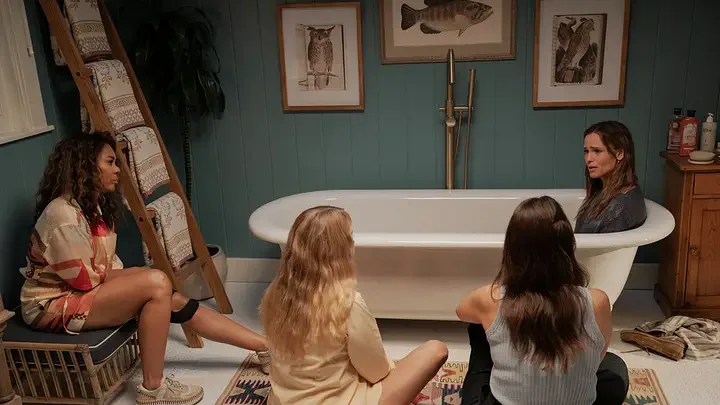
6 Things I Learned From Binge-Watching The Five-Star Weekend
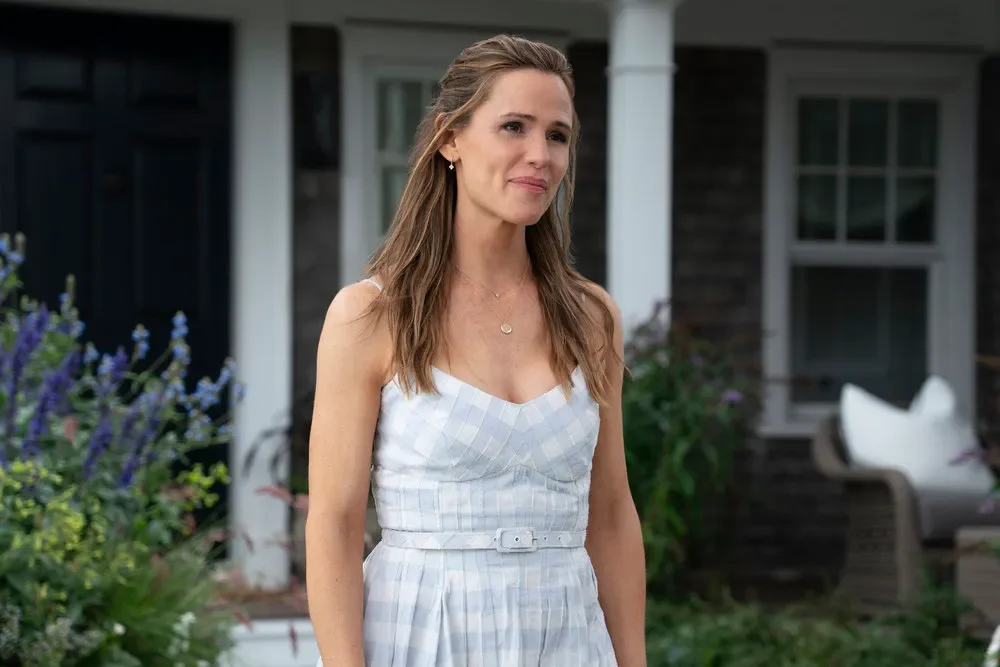
I spent half of my Saturday evening and most of my Sunday morning binge-watching all eight episodes of The Five-Star Weekend. I went in expecting an easy weekend watch; instead, I found myself in a puddle of tears or rolling over with laughter every single episode. There is something about a story that brings out your contemplative side, and this is one of them. I was hyperfixated on the characters and their stories, which led me to reflect more on the people who have shaped my own life.
Hollis Shaw experiences a tragic life event right before Christmas. Months later, she does the only thing that makes sense to a woman who has spent her life holding everything together: she invites four women from four different chapters of her life to her house on Nantucket and waits to see what happens when they're all in the same room.
What happens, of course, is everything. Old resentments surface. Secrets that had nowhere to go for twenty years finally go somewhere. And throughout it all is a question I couldn't stop wondering about after the credits rolled: what do we actually owe the people who knew us before we became who we are now?
It left me reflecting on friendship, grief, identity, and the silent ways we continue to become throughout adulthood, and at times don’t even recognize our growth and evolution. Without giving away any spoilers, here are six things that stayed with me long after I finished the final episode.
Grief doesn't wait for the right time
Hollis is still mid-collapse when she starts pulling this weekend together, and I love that the show never pretends otherwise. She's functioning, she's hosting, she's plating food beautifully for her friends in the midst of their own crises. It's a beautiful testament to me how grief can coexist with joy, excitement, and the things that bring us internal solitude, if only momentarily. I think we inherit an idea that healing has a schedule, that you get through the hard part and then you're available again. Watching her host a full guest list while barely holding her own life together reminded me that competence and grief live in the same body at the same time, more often than anyone wants to admit.
There is something deeply human about recognizing that healing is not the absence of responsibility. Often, they exist alongside each other. Life does not pause while we learn to carry loss and hardship. We continue to show up for work, make dinner, answer texts, and care for the people we love, even when something inside us has fundamentally changed.
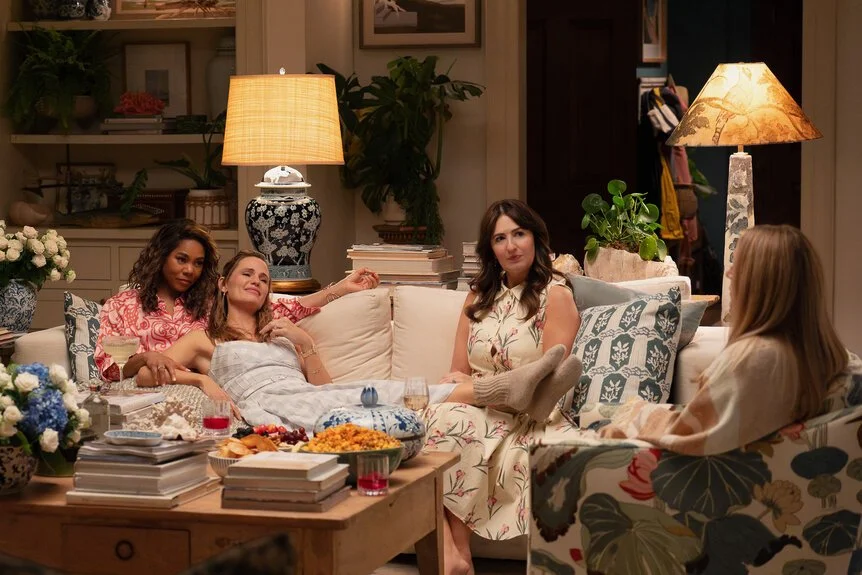
The friends who knew you at every age see something the new ones can't
Each woman in that house met Hollis at a different point in her becoming. That's part of what makes the weekend combustible. There's a different level of self-exposure being in a room with people who remember you before you fully knew who you were trying to be. It's uncomfortable in a way that newer relationships never are, because there's no origin story to control.
Every friendship preserves a different chapter of your life, and sometimes seeing those chapters gathered together reminds you just how much you have changed. It also reminds you that growth does not erase where you began.
Reinvention is an act of integration, not erasure
I have spent years thinking about identity through the lens of branding, creativity, and personal growth. I remind myself and clients all the time that becoming someone new does not require abandoning who you once were. The earlier versions of ourselves are not mistakes to outgrow. They are part of the foundation we continue building upon.
Hollis built herself into a celebrity chef/influencer, a brand, a public version of a woman who used to be someone entirely different from who she was when she grew up. Her past resurfacing is proof that the past doesn't stay where it is just because you moved on from it. First loves left in place, in the same town, doing the same life, have a way of making you confront the parts of yourself you assumed you'd outgrown. I don't think reinvention asks us to leave earlier versions of ourselves behind. It asks us to understand how each one continues to shape the person we've become.
We are rarely carrying the only complicated story in the room
The show's whole architecture depends on the fact that every woman arrives certain that her hidden thing is the most damaging, most disqualifying, and every one of them is wrong in the same way. It is easy to believe that our struggles make us difficult to understand or impossible to relate to. More often than not, everyone around us is carrying something undetectable on the surface. Remembering that softens the way we move through connections and conversations. It makes curiosity easier than judgment.
Nobody's secret is as isolating as they believe it is, and nobody's judgment is as sharp as they fear. I recognized their loneliness, which results from the assumption that your specific complication makes you ineligible for love, like, or respect from others.
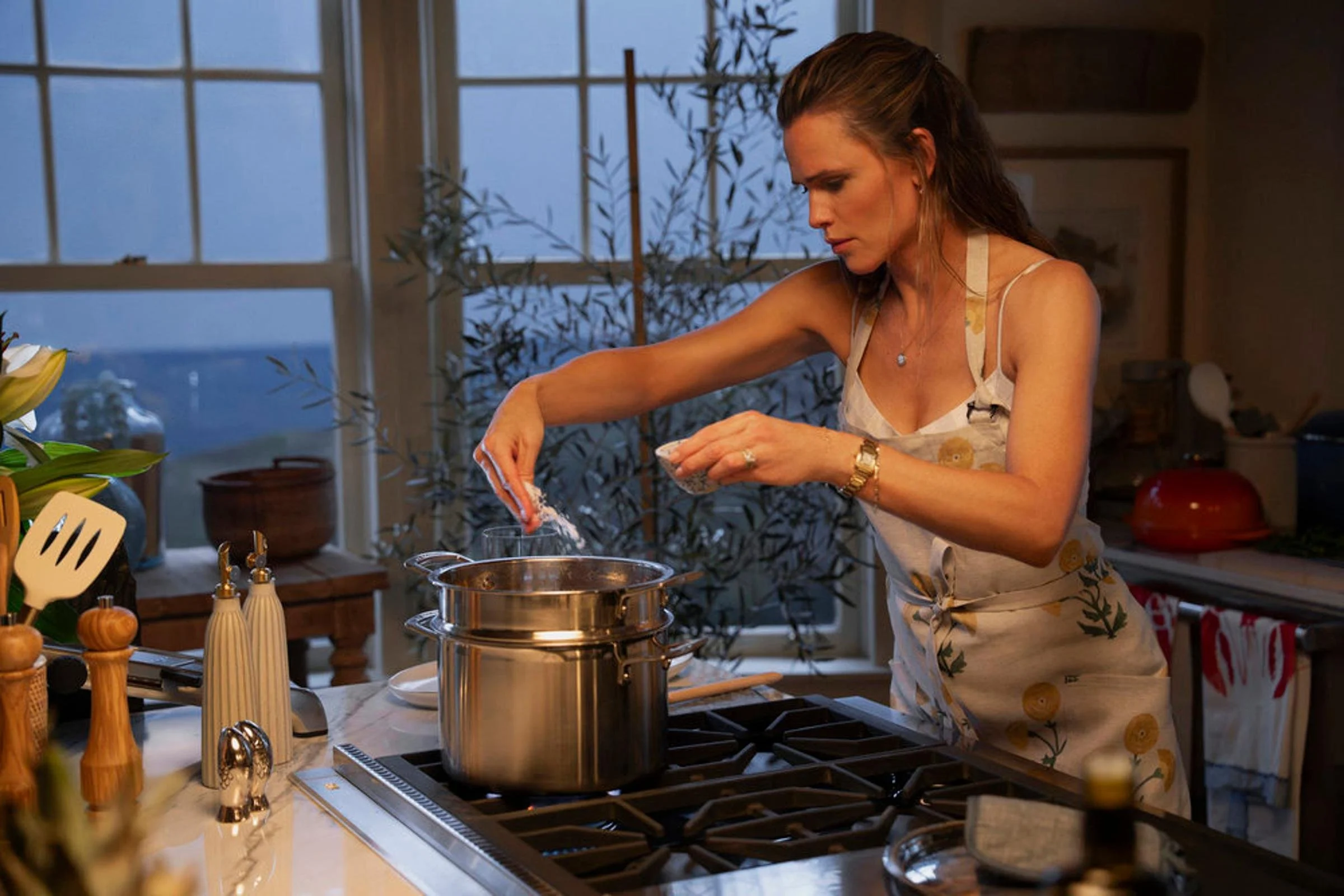
Hosting can be a form of control, and also an expression of love
Hollis creates and cares for the people she loves. It's how she processes, how she manages a room, how she avoids sitting still with what's actually happening to her. I don't think that makes it dishonest. I think care and control often wear the same outfit, and the show is generous enough not to force you to pick which one is the true motive. Sometimes it's both, at the same time, and neither one cancels the other out.
Sometimes we pour into other people because generosity is simply who we are. Sometimes we do it because it feels safer than turning inward. The two are not always opposites. Human motivation is often more layered than we give it credit for, and I appreciate stories that leave room for those contradictions instead of trying to resolve them.
The right conversations can change us more than time ever will
We have been told for centuries, “time heals old wounds.” I am beginning to think honesty does far more of that work than time alone ever could. Nothing about this gathering is casual. Four days on an island with the accumulated weight of decades between them, and by the end, more has shifted than it would in a year of surface-level check-ins. There's something so beautiful in that. Distance and time don't manufacture honesty. Proximity does, eventually, if you stay in the room long enough for the performance to get tired. Real conversations and proximity have a way of collapsing years of distance into a single moment if you allow them to. They remind us that transformation often waits on truth rather than on the passage of another season.
I love stories that entertain me, but I love them even more when they ask me to examine my own life.
The Five-Star Weekend ended up being one of those stories for me, because it left me thinking about the people who have witnessed different versions of me, the parts of myself I have carried forward, and the conversations that have changed the course of my life.
I didn't expect a Peacock beach drama to leave me thinking about grief timelines, old friendships, and what it costs to keep performing a version of yourself long after it's useful. But that's usually how it goes with the stories that get under your skin. You go into them excited and open-minded, and leave with something you're still trying to unravel days later.
If you’ve already watched, I'd love to hear what you took from it, too.